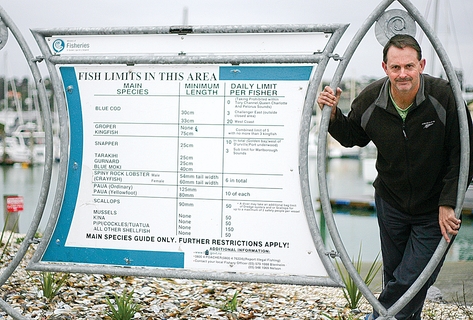
There’s plenty more fish in the sea for now at least, but will a quota rise deplete the stock?
Prime Minister John Key argues that the snapper quota debate is more talked about than the controversial GCSB Bill, as many condemn the idea of being restricted to a three snapper maximum catch off the North Island’s East Coast. But one Nelson fisherman thinks our recreational quota is too generous, and it’s about to become even more so.
The Snapper 1 fishery zone currently allows for a daily catch of ten snapper tops in the Challenger Area. In the Marlborough Sounds, however, it only allows for three. But with an apparent abundance of snapper in those historically vacant waters, the Ministry of Primary Industries is proposing to lift that quota to five, which has rocked the boat of the president of the Nelson Dawnbreakers Fishing Club.
Doug McKay wrote a personal submission after reading the proposal and says many more of his club members did the same. While those opinions may have differed, Doug remains certain that anyone seeking more than the current quota is just being greedy and, being sceptical of the reported rise in Marlborough Sounds snapper, he is worried that snapper numbers could diminish, resulting in a reduced quota in the near future. “To increase the quota to five in the Marlborough Sounds is just crazy,” he says. “In my experience they’ve been harder to catch and you’d hate to ask the question in three year’s time, ‘should we have changed it?’”
Doug believes some changes should be made closer to home, although it is a reduction not an increase that he would back. “There’s no way people can eat that much. It seems like an awful lot of fish to me. Some people think it’s their God-given right to catch that amount of fish but you can still have a lot of fun and put them back, it’s not difficult.”
An official announcement on the proposal will be made on October 1 and it could also include a change to the number of commercial snapper allowed to be caught. The total allowable catch in Snapper 1 is currently 306 tonnes per year. That is split between commercial (200 tonnes), Maori (16) and recreational (90) but could change to figures of 220 tonnes, 16 tonnes and 99 tonnes, making up a new 350 tonnes total.
The submission cut off has already been and gone.